ČSLA Knife
UTON vz.75
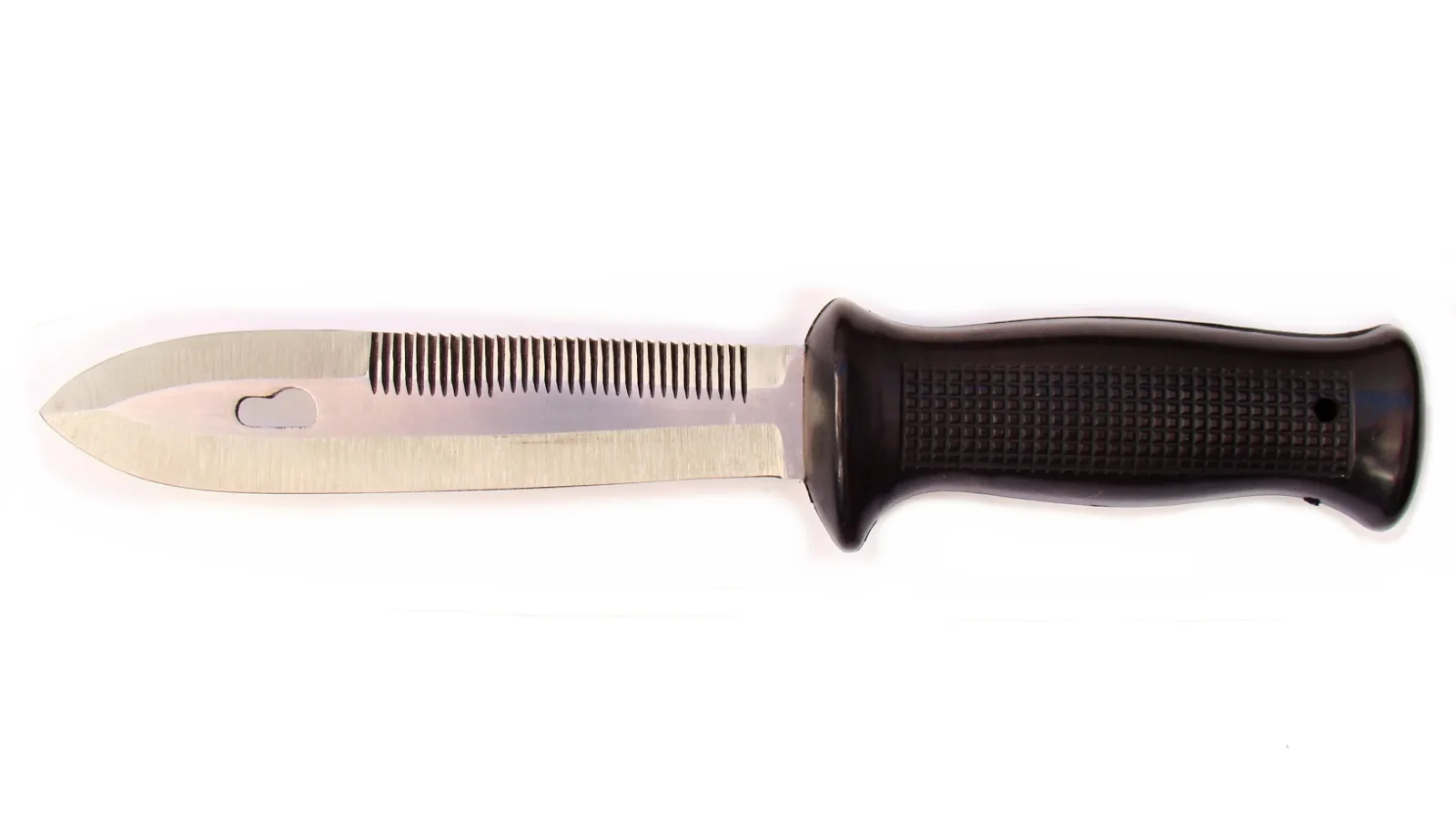
The UTON vz.75 knife — standard assault knife of the Czechoslovak People's Army from 1975.
Scout Prototype
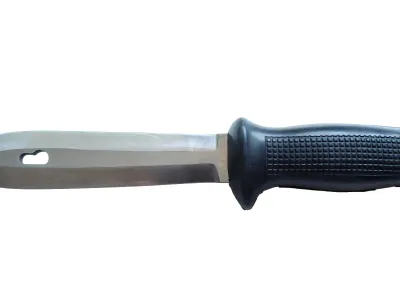
Pilot Prototype
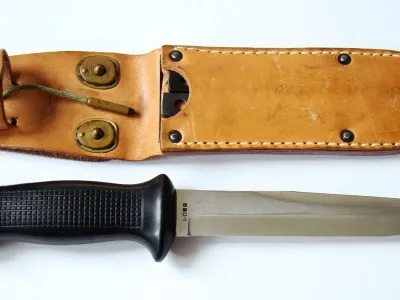
UTON 0001
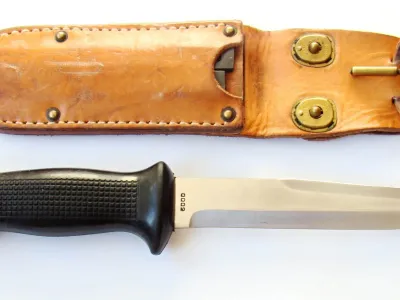
UTON 0002
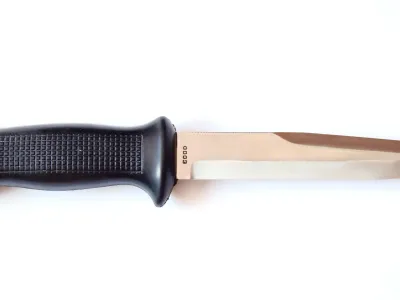
UTON 0003
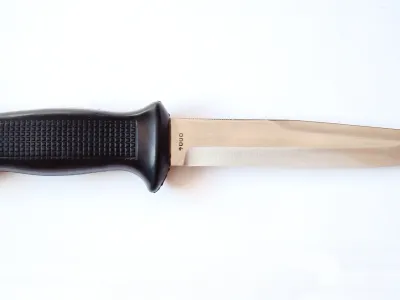
UTON 0004
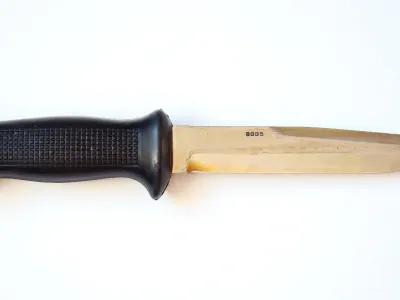
UTON 0005
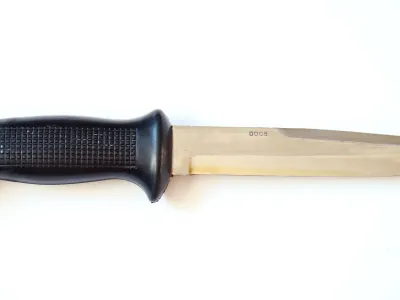
UTON 0006
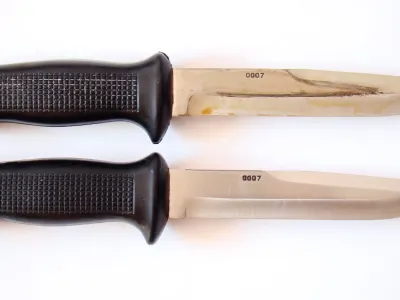
UTON 0007
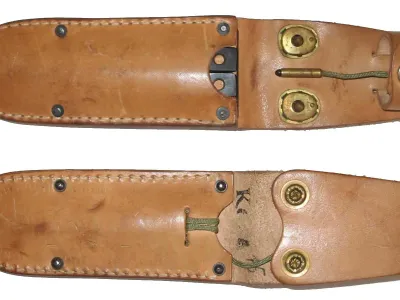
Sheaths & Markings
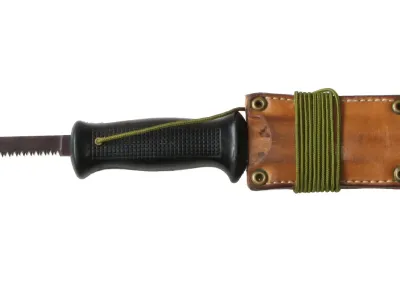
Accessories
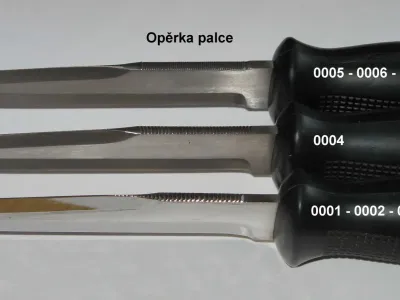
Details
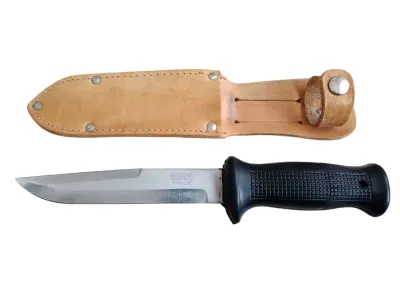
Military vs. civilian – how to tell
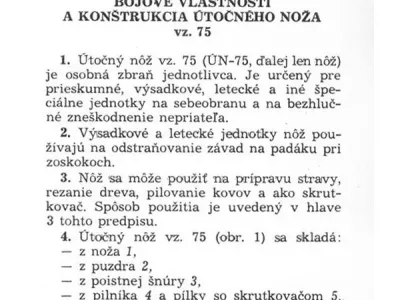
Regulations
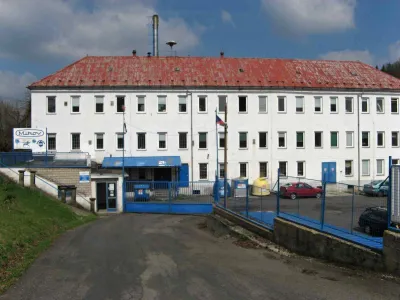
Production – cross-section – blueprint
Kin-Dot
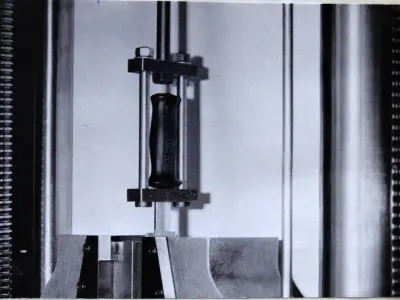
Army Tests
Use
The assault knife model 75 was introduced into the ČSLA as a personal weapon. It was designed for reconnaissance, parachute and aviation units for self-defense and silent neutralization of the enemy. Parachute and aviation units used UTON for removing faults on the parachute during jumps — it was placed on the reserve parachute on the paratrooper's chest.
UTON was delivered in a paper box and packed 10 pieces together with a sharpening stone. The army stored UTON knives coated with preservation grease P. The preservation grease dried out over the years and formed a protective coating on the blade. The grease can easily be removed with alcohol, petrol etc.
Development of the UTON Knife
Its production began in 1973, when the first information is known — stamps on production drawings of the knife and accessories. It was to replace the obsolete VO-7 knife. The development was undertaken by staff of research institute 010 Slavičín in cooperation with knife manufacturer MIKOV. On 15 December 1976, technical conditions TP-VD-648-76 were approved for the production and acceptance of assault knives vz.75.
The technical conditions specified that the blade would be made from stainless steel 17029 and heat-treated using MARTFROST technology (deep freezing of the blade after hardening) to a surface hardness of 50–58 HRC. The blade was ground to a surface roughness of 0.2 to 0.8 Ra to reduce reflections. The blade is single-edged with a center point, the spine cross-hatched to half (thumb rest) and from half ground to a false edge.
A four-digit number indicating the series and blade manufacturing process was stamped on the blade over the years:
- 0001 — production series not yet fully meeting technical conditions. Blade hot forged. Approx. 500 pcs produced.
- 0002 — blade made by cutting from solid material, processed by grinding after hardening and cold straightening. 1,680 pcs produced.
- 0003 — blade cut from solid material, processed by grinding and cooled by air in a straightening fixture. 4,500 pcs produced.
- 0004 and later — series correspond to the final technology for blade production (forgings).
Series numbers 0001–0004 were stamped on the right side of the blade near the base, numbers 0004–0007 on the right side near the spine. The thumb rest and false edge differed on individual series — details can be found on the pages for series 0005, 0006 and 0007.
The handle was made from rubber marked 137.21 and pressed onto the knife blade by the GUMOKOVO Hradec Králové company. This original rubber came from Cuba. Before pressing the handle, two plates were riveted to the blade as reinforcement of the rear part for inserting the file and saw. The handle was roughened on the side with a grid of grooves. The rear part of the handle has a slot for inserting the file and saw, and on the end of the handle side there is a 6 mm diameter hole for the securing brass pin.
The accessories were developed by staff with the AJAX Jihlava company. Steel 14180 was specified for production of the file and saw, hardness of the file 56–60 HRC and the saw 45–54 HRC. Nylon cord, diameter 2.5 mm, length 2 meters. More about the manufacturing process can be found on the Production page.
Sheaths
UTON sheaths were made from natural cowhide by the KOZAP company. The sheath was sewn from five layers of leather and secured with five rivets, which gradually increased in size as they were being pulled out. A complete overview of all types can be found on the Sheaths page.
- 1976 — small iron rivets with washers on both sides.
- 1976 — small brass rivets with washers on both sides.
- 1977 — two types of small brass rivets: flat head and semi-round head with hole at the bottom.
- From 1977 — large brass rivets with hole in the center. Marked years 1978, 1979, last marking from 1983.
Testing of UTON vz.75 Knives
UTON knives had to pass rigorous tests before acceptance into the ČSLA. Technical conditions are available on the Regulations page:
- Blade flexibility test — withstand bending to both sides by 5°.
- Edge durability test — 500 cuts into hard wood, then sharpness test.
- Edge sharpness test — cut a 2 m parachute cord loaded with 2 kg weight in one stroke.
- File test — file through wire mesh up to 3 mm diameter.
- Saw test — cut through a 30×30 mm dry and wet wood beam.
- Screwdriver test — torque of 8 Nm in both directions.
- Cord test — tension 100 N and drop of 1 kg weight from 0.5 m.
- Corrosion test — resistance to sulfuric acid vapors.
- Handle pull-off test — min. 1,000 N (at 4,760 N the blade began to loosen).
After acceptance into service, the UTON vz.75 was gradually replaced by the BONUS vz.85 knife, which showed significantly higher strength and durability.
Technical Specifications
- Total length with sheath
- 270 mm
- Knife length
- 248 mm
- Blade length
- 140 mm
- Blade width
- 25 mm
- Blade thickness
- 3.7 mm
- Steel
- 17029
- Knife weight
- 200 g
- Weight with sheath
- 380 g
- Cord length
- 2,000 mm
- File length
- 130 mm
- File thickness
- 13 mm
- File weight
- 35 g
- Saw weight
- 30 g
Frequently Asked Questions
What is the main difference between the military and civilian UTON knife?
The military UTON is marked with a number on the right side of the blade and the handle is made of smooth, glossy rubber. The civilian UTON is marked with a number on the left side of the blade and the handle is made of rubber with a matte and roughened surface.
What is the UTON vz.75?
The UTON vz.75 is an assault knife of the Czechoslovak People's Army introduced in 1975. It was designed as a personal weapon for reconnaissance, parachute and aviation units. It was manufactured by the Mikov company in cooperation with research institute 010 Slavičín.
What steel is the UTON vz.75 blade made from?
The blade of the UTON vz.75 is made from stainless steel 17029 and heat-treated using MARTFROST technology (deep freezing of the blade after hardening) to a surface hardness of 50–58 HRC.
How many production series of the UTON vz.75 exist?
There are a total of 7 production series numbered 0001 to 0007. The most valuable is series 0001, of which only 500 pieces were produced. The series differ in blade manufacturing technology, thumb rest and false edge.
What are the dimensions and weight of the UTON vz.75?
Knife length is 248 mm, blade length 140 mm, blade width 25 mm, blade thickness 3.7 mm. Weight of the knife alone is 200 g, with sheath 380 g.
What replaced the UTON vz.75?
The UTON vz.75 was gradually replaced by the BONUS vz.85 knife, which was introduced in 1985 and showed significantly higher strength and durability.
Who made the sheaths for the UTON vz.75?
Sheaths for the UTON vz.75 were made by the KOZAP company from natural cowhide. The sheath is sewn from five layers of leather and secured with rivets. They were produced from 1976 with gradually changing rivet types.